
About
Where it is: There are three orchards to be found thorough out the park. Our main orchard the ”Community Orchard” can be found on the southwest side of our playing field. The second of our orchards called “The Plum Grove” can be found to the Northwest side of our playing field, near the Table tennis area. The third called “The Food Forest” can be found in The Avenue.
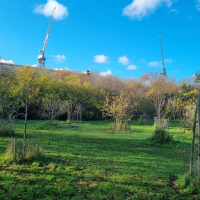
What Plant/Tree life to look out for: The original planting for the Community Orchard began in 2010 with additions in 2017, 2018, 2019 and 2026. This orchard if it comes to fruition (excuse the pun) will showcase a veritable who’s who of UK fruiting trees. At the time of writing there are presently 22 trees in the orchard.
There are 10 Apple trees including cooking apples like Bramley: large, acidic. Dessert/Eating apples like Bardsley: Medium-sized, cream-colored fruit, sometimes with a pink flush, Saturn: A bright red apple with a white-yellowish, crisp, and juicy flesh. Cox: Regarded as a quintessential English apple, it has an orange-red flush over a yellow-green base. Known for its complex, aromatic, and intense sweet-sharp flavour. Egremont Russet: A nutty, dry taste.

The pear trees comprise 3 distinct European pear varieties that are frequently combined in “family” or “trio” fruit trees due to their complementary pollination and fruiting times. Concorde: a long, slender, tapered shape with green skin that turns yellow and develops a brown/gold russet. Williams BC: A classic, early-season, yellow-skinned, and highly aromatic pear. It is known for its juicy, sweet, and white flesh. Doyenné du Comice: A late-season French variety often considered to have the best flavour, offering a rich, sweet, and very juicy experience. The fruit is generally large, often with a yellow-green skin and, sometimes, a red flush.
The plum trees include Marjorie’s Seedling: A large, purple-blue, sweet fruit. It is self-fertile, and acts as a good, late-season pollinator. Victoria: The UK’s most popular plum variety, valued for its heavy crops of dual-purpose fruit that can be eaten fresh or used for cooking. Merryweather Damson is a variety of damson tree, which is a close relative of the plum. A large, round-oval, deep blue-black fruit with yellow, juicy, and slightly acidic flesh. It is considered a culinary, dual-purpose variety that makes exceptional jam and preserves but is sweet enough to eat off the tree.


To add more biodiversity and showcase as many complimentary species as possible you will also find; Gage Oullins Golden: A popular French dessert gage (introduced to the UK in1860). It is known for large, sweet, golden-yellow fruit. It is ideal for eating fresh, cooking, or bottling. Medlar Nottingham: Widely considered the best-flavoured and most popular variety of this ancient heritage fruit. It is a small, slow-growing tree valued for both its ornamental beauty with it’s gnarled, twisting trunk and large white spring blossoms and its unique, apple-sauce-flavoured fruit. Champion Quince: Another ornamental favourite it produces a large, plump, golden-yellow fruit with a pear-like shape. The fruit is highly fragrant and has an excellent flavour when cooked.
Cherry (Stardust): A modern sweet cherry variety prized for being the first self-fertile, white-fleshed cherry, meaning it does not require a second tree for pollination. It produces large, firm, heart-shaped cherries with creamy-white, exceptionally sweet flesh and orange-to-red flushed skin. Apricot (Golden Glow): Discovered as a chance seedling in the Malvern Hills, Worcestershire, in 1985, it produces medium-sized, intensely flavoured golden fruits that ripen in early August. Mulberry: Fruits are small, sweet, and juicy berries, often compared to blackberries. The colour of the fruit ranging from white to lavender and dark purple-black when ripe in late spring/summer. They are highly nutritious, packed with vitamins, antioxidants, and fibre, and are eaten fresh, dried, or in jams/desserts

A long-term project of the Caledonian Park Friends Group. This is a relatively young orchard, and the trees still need to develop and mature to truly begin to blossom and bear fruit. If the signs indicate it is “Ok” to do so, feel free to pick one of our fruits and have a try. We only ask that you think of, respect others, and do no harm to the well-being of the trees.
The second of our orchards is The Plum Grove and the name tells the story. It is a more mature orchard planted with mostly plum trees and with a few other species like Rowan and Horse Chestnut for biodiversity.

The third orchard, The Food Forest is our youngest with planting started in 2025. Presently consisting of similar cheery, apricot, quince, medlar and mulberry trees to the Community Orchard, these have been complimented with Crab Apple, Peach, Olive, Highbush Blueberry, Boysen Berry, Ficus and Almond trees. Planted in a linear arrangement to compliment the shape of the avenue. The expectation is that this orchard will add further biodiversity for the pollinators in the area, more fruit bounty for all, and also create a striking visual perspective to frame The Clocktower as you approach the North Entrance.
What Insect/Bird/Animal life to look out for: The orchards attract a wide variety of wild visitors but is busiest in spring and summer. Pollinators like bees and butterflies are in abundance at this time and this added to the tempting fruit is a bounty birds of all varieties cannot resist. Thrushes (Mistle, Song, Redwing, Fieldfare) are highly attracted to berries and windfall fruit. Robins adore small pieces of apple and soft fruits. Blackbirds, Woodpigeons and Blackcaps are fond of apples, pears and berries.
Things To Do
There are a variety of activities available to visitors of The Orchards.
Butterfly Conservation – Help record and monitor UK Butterfly population.
Bumblebee Conservation Trust – Help record and monitor UK Bumblebee population
Big Garden Bird Watch – Help the RSPB record and monitor the UK Bird population as you wander through our woodlands.
Projects
There are a variety of projects occurring in The Orchards:
Our “Projects:” in this area are presently being Catalogued. Please visit here and view again, they will be available shortly.
Gallery
