About
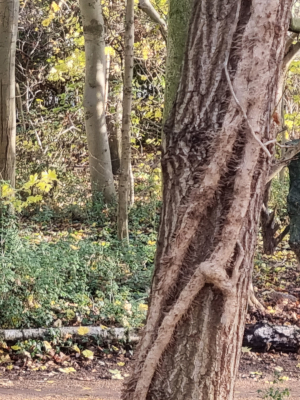
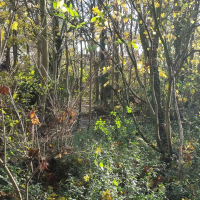
Where it is: Our woodland area constitutes a major part of the 18+ acre parks habitat. Primarily located around the perimeter of the park. Forming a horseshoe shape, it stretches from the westside to the eastside of the park, broken only by the southside park entrance.
Our woodland areas are semi-mature woodlands rather than ancient woodlands having been established through extensive planting in 1980.
Uncreatively but descriptively called our East and West Woodland each has its own hidden gems to discover.


Our East Woodland contains several hidden glades and paths. Find and follow our short, but interesting wilderness loop (wheelchair friendly) and you will discover another one of the small reminders of the park’s history. Remnants of the old Victorian Privies, from the parks cattle market heritage. If you didn’t know privy is the old-fashioned name for a loo/toilet. What a thought…150 plus year old loo tiles and fixtures. Please don’t think we have not upgraded since then; our modern loos are available beside our café.
Our larger West Woodland is filled with many tranquil paths to explore and many unexpected treats and surprises.
Look out for the Woodland Amphitheatre and its backdrop made of locally created murals. Whilst we are still searching for our own resident William Shakespeare, many fun and unusual presentations occur here. Available for public use, find out more Contact US
Our Tree circle classroom can be found in this area and can be freely used during the park’s opening times.

There is even a secluded Pet Memory Wall located in these woodlands. Here many of our former doggie friends of the park are remembered. To find out more Contact US
What Plant/Tree life to look out for: There are 3 main Woodland types. Ancient Woodland: Land that has been continuously wooded since at least 1600. Deciduous Woodland: Comprised of broadleaf species like oak, ash, and birch. Coniferous Plantations: Often single-species areas (e.g., Scots Pine) managed for timber.
The parks woodlands are deciduous. Primarily composed of a diverse range of native broadleaf and coniferous species that provide habitat for a variety of wildlife. English Oak: The most iconic UK tree, supporting over 2,300 wildlife species. Common Beech: Known for its smooth grey bark and coppery autumn leaves. Silver Birch: Often called the ‘lady of the woods’, it features distinctive white bark and a slender form. Rowan/Mountain Ash: A hardy tree with white spring flowers and bright red autumn berries. Hornbeam: Similar to beech, it is frequently used in traditional woodlands and hedgerows.
What Insect/Bird/Animal life to look out for: Over 4,000 species of beetles exist in Britain, with many found in woodland areas. Some of the key species to look out for include the Stag beetle (Britain’s largest), Minotaur beetle, Wasp beetle, Devil’s Coach Horse, Cockchafer (May bug) and Rose chafer.
True Bugs like the Forest bug and Hawthorn Shieldbug can be found residing on the trees, whilst the damp floor supports a wide variety of invertebrate like centipedes, millipedes, and woodlice.
Butterflies & Moths species can often be found in the woodland rides and glades. Butterflies including the Purple Emperor, Speckled Wood, Orange-tip, Peacock and White Admiral. Moths including the Broad-bordered Bee Hawk Moth (which mimics a bumblebee) and the Magpie Moth.

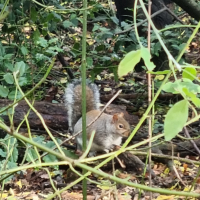
Of our native bird species some of our resident friends you might see around the woodlands include woodpeckers, wrens, robins, magpies and wood pigeons. There are also many visiting species to keep an eye out for including Sparrows, Blue Tits, Blackbirds, Starlings and Goldfinches to name a few.
The mammals are a bit scarcer; squirrels abound and many a wily fox appears on their dusk till dawn adventures.
Things to do
Want to do more than just have a tranquil walk? There are a variety of activities to entertain and educate visitors from “Kids Woodland Picnics” to “School Educational Trips”. Here are just some you can do:
Read More
Big Garden Bird Watch – Help the RSPB record and monitor the UK Bird population as you wander through our woodlands.
Monkey Catch Day – Help London Zoo recover their escaped Orangutans.
Projects
There are a variety of projects ongoing in the woodland.
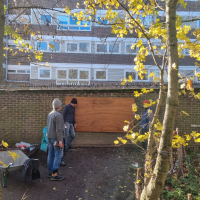
CPFG – Constructing Dead Hedges
Islington Ecology Team – Constructing a wildlife refuge.

Gallery